

A lot of homeowners in Abingdon, MD start searching for lawn solutions because something in their yard simply is not working the way it should. Grass that drowns in spring, shrubs that look stressed by August, or bare patches that never seem to fill in. These are not random problems. They are almost always connected to the specific soil and climate conditions that define this part of Harford County. Good landscape design Abingdon MD starts with understanding those conditions, not overriding them. What grows here, what struggles here, and why your neighbor’s yard looks the way it does all comes back to the same handful of environmental factors.
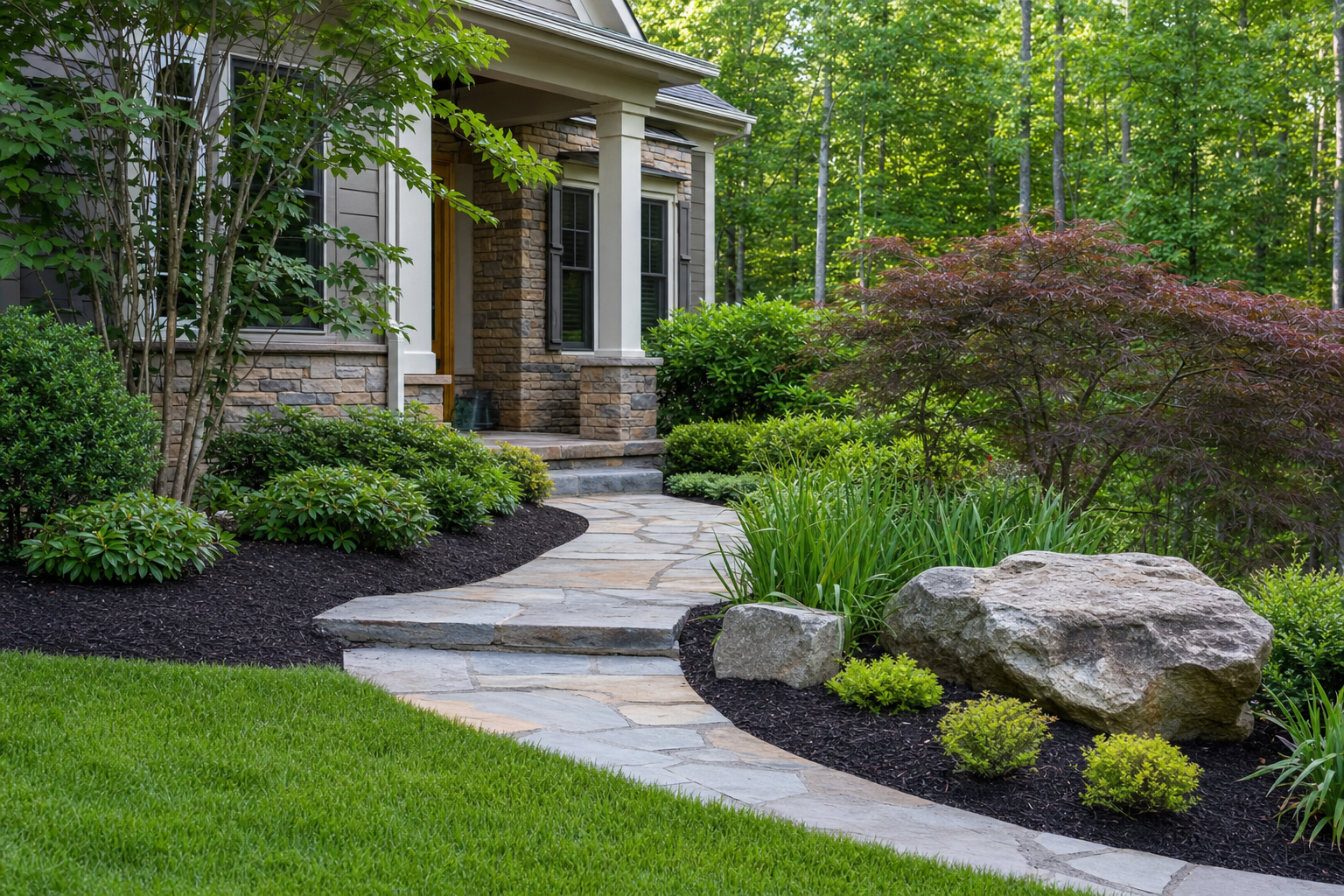 native plants for an Abingdon MD yard” style=”width:100%;max-width:900px;aspect-ratio:3/2;object-fit:cover;height:auto;display:block;margin:0 auto;border-radius:4px;” />
The Soil Beneath Abingdon: Clay, Compaction, and the Piedmont Transition
Abingdon sits near the boundary between Maryland’s Piedmont plateau and the Atlantic Coastal Plain, and that transition shows up directly in the soil. Much of the residential land in this area has a heavy clay subsoil layer that sits surprisingly close to the surface. Clay holds moisture well but drains poorly, and in developed neighborhoods where topsoil was stripped during construction, that clay is often the first thing roots hit.
What this means practically: water pools after heavy rain, roots struggle to establish in compacted ground, and turf grass under stress during summer heat has nowhere to recover. The Gunpowder River watershed, which runs through the broader Abingdon and Joppa corridor, contributes to naturally higher soil moisture in low-lying areas. If your property has any grade change at all, runoff and drainage are almost certainly part of the picture.
This is why so many landscape projects in the area end up requiring excavation work before planting ever begins. Amending clay soil at the surface without addressing drainage below it is a short-term fix. Proper grading, French drains, and drainage corrections are often what separates a landscape that thrives from one that looks fine for a season and then slowly declines. Our article on why mulching matters more in Abingdon than you might think gets into how surface treatment connects to these deeper soil conditions.
USDA Zone 7a and What It Actually Means for Landscape Design Abingdon MD
Abingdon falls in USDA Plant Hardiness Zone 7a, with average annual minimum temperatures ranging from 0 to 5 degrees Fahrenheit. That zone classification shapes which perennials survive winter, which shrubs need protection, and how early you can push spring plantings.
Zone 7a is genuinely generous for plant diversity. Broadleaf evergreens like American Holly, Southern Magnolia, and Inkberry Holly are all viable here. Native grasses including Little Bluestem and Eastern Gamagrass handle the summer humidity without the disease pressure that plagues traditional fescue lawns by mid-July. Serviceberry, Redbud, and Sweetbay Magnolia are native understory trees that fit Abingdon’s climate almost perfectly and provide multi-season interest without the maintenance burden of exotic ornamentals.
The humidity is the variable most homeowners underestimate. Abingdon averages around 42 inches of rainfall annually, but the distribution matters as much as the total. Wet springs followed by hot, humid summers create fungal pressure on turf, particularly in shaded or low-drainage areas. Tall Fescue remains the most practical cool-season grass for this region because it tolerates both the summer stress and the clay soil better than Kentucky Bluegrass, but even Fescue needs core aeration and proper seeding timing to stay dense. May is actually a reasonable window to assess turf health before summer heat sets in, though major seeding work is better deferred to early fall.
Native Plants That Belong in an Abingdon Landscape
One of the more interesting aspects of landscape design Abingdon MD homeowners often overlook is how well Maryland’s native plant palette fits the specific conditions here. These plants evolved with this soil, this rainfall pattern, and these insects. They require less intervention once established and tend to look more natural within the regional landscape character.
A few worth knowing:
- Virginia Sweetspire (Itea virginica): Tolerates wet clay soils, produces fragrant white flowers in early summer, and turns brilliant red-orange in fall. It is genuinely underused in residential landscaping here.
- Buttonbush (Cephalanthus occidentalis): Thrives in low, wet areas where other shrubs fail. If you have a drainage problem area, this plant turns a liability into a feature.
- Eastern Red Cedar (Juniperus virginiana): Often dismissed as a weed tree, it is actually one of the most useful privacy screening plants for this region. Dense, evergreen, drought-tolerant once established, and a significant wildlife habitat plant.
- Wild Columbine (Aquilegia canadensis): A native perennial that seeds itself naturally in partly shaded spots and requires almost no maintenance after the first season.
Pairing natives with thoughtful hardscape elements, patios, retaining walls, and defined bed edges, is where design and build work creates something that holds up over years rather than just looking good in the first season. Our 2026 landscape design trends post covers how native integration is becoming a dominant design direction regionally, and Abingdon’s ecology makes it a natural fit.
Seasonal Timing and What May Means for Your Yard
Mid-May in Abingdon is a transitional moment. Soil temperatures are consistently above 60 degrees, which means warm-season weeds are germinating aggressively and cool-season turf is approaching its summer stress period. This is the right time to finalize mulching in planting beds, address any bare spots in lawn areas before heat locks them in, and evaluate whether existing shrubs and perennials came through winter cleanly.
It is also a good window to look honestly at drainage. If you noticed standing water during April’s rains, that pattern will worsen as summer storms arrive. Addressing grade and drainage issues now, before the ground dries and hardens in July, is far easier than trying to correct them in the heat of summer.
For homeowners thinking about larger projects, late spring is when lawn maintenance schedules and design consultations tend to align well. Understanding what your specific property needs, based on its soil, grade, and sun exposure, is the starting point for any project that will actually last. That local knowledge is what distinguishes landscape design Abingdon MD homeowners can rely on from generic landscaping advice that ignores what this region actually demands. If you are ready to talk through what your property needs, reach out to our team and we can start with an honest assessment of what you are working with.
FAQ: Landscape Design in Abingdon, MD
Why do native plants matter in landscape design?
Native and regionally adapted plants are more likely to fit local soil, rainfall, heat, and wildlife conditions when they are placed correctly.
What should be checked before designing a landscape?
Soil, drainage, sunlight, shade, mature tree roots, slope, and how the homeowner uses the space should all be reviewed first.
Can landscape design include hardscaping?
Yes. Strong designs often coordinate plantings with patios, walls, walkways, drainage, lighting, and outdoor living areas.